




When your heart skips a beat, fluttering rapidly or thumping against your chest, it can trigger instant panic. Your mind immediately jumps to the worst-case scenario: Am I having a heart attack?
While heart palpitations are frightening, they are extremely common. Often, these fluttering sensations are caused by Premature Ventricular Contractions (PVCs)—a usually harmless glitch in your heart’s electrical system. However, because some symptoms overlap with a heart attack, knowing how to tell them apart can save you unnecessary anxiety—or even save your life.
Let’s break down the key differences between PVC heart symptoms vs heart attack symptoms
What Are PVCs? (Premature Ventricular Contractions)
To understand PVCs, think of your heart as a house with electrical wiring. Normally, the heart’s natural pacemaker (the SA node) sends an electrical signal from the top chambers (atria) down to the bottom chambers (ventricles), telling them when to pump.
A PVC happens when the bottom chambers fire an electrical signal too early, before the top chambers have a chance to send theirs.
Because the heart beats out of rhythm, it pauses briefly to reset. That extra pause allows the heart to fill with a little more blood than usual. When it beats next, it pushes that extra blood out with a forceful thud.
What PVCs Feel Like
Most people describe PVCs as:
- A skipped beat: It feels like your heart briefly stopped or paused.
- A sudden thud or flutter: A heavy, forceful beat right in the chest or throat.
- A flip-flopping feeling: As if a bird is fluttering inside your chest.
- A sudden dip or pause: Followed by a strong kick.
Common Triggers for PVCs
PVCs often happen when your nervous system is extra sensitive. Common culprits include:
- Caffeine (coffee, energy drinks, soda)
- Stress, anxiety, or panic attacks
- Lack of sleep or physical exhaustion
- Nicotine or alcohol
- Dehydration or electrolyte imbalances (like low potassium or magnesium)
For most people with healthy hearts, PVCs are entirely harmless. They are an annoying “hiccup” in your heart rhythm rather than a sign of structural heart disease.
What Is a Heart Attack?
While a PVC is an electrical issue, a heart attack (myocardial infarction) is a plumbing problem.
A heart attack occurs when a coronary artery—one of the main blood vessels feeding your heart muscle—becomes blocked. Without a steady supply of oxygen-rich blood, the heart muscle begins to suffer damage.
Unlike PVCs, which come and go in seconds, a heart attack is a medical emergency that requires immediate care to prevent permanent damage or cardiac arrest.
Classic Heart Attack Symptoms
A heart attack rarely feels like a single skipped beat. Instead, it produces persistent, heavy discomfort and systemic body reactions:
- Chest pressure or pain: Often described as a heavy weight, squeezing, tight band, or crushing fullness in the center or left side of the chest.
- Radiating pain: Discomfort that spreads to your left arm, shoulder, neck, jaw, back, or upper stomach.
- Shortness of breath: Feeling winded even while sitting still or doing light activity.
- Cold sweats: Breaking out in a sudden, clammy sweat without physical exertion.
- Nausea or lightheadedness: Feeling dizzy, faint, or sick to your stomach.
Key Differences: PVC Symptoms vs. Heart Attack Symptoms
To quickly compare how these two conditions present, here is a breakdown of their primary differences:
| Feature | PVC Symptoms | Heart Attack Symptoms |
| Primary Sensation | Fluttering, pounding, or a skipped beat | Heavy pressure, tightness, squeezing, or crushing pain |
| Duration | Lasts a few seconds or comes in brief, intermittent bursts | Persistent; lasts for several minutes or continuously worsens |
| Triggers | Stress, caffeine, fatigue, dehydration, anxiety | Physical effort, emotional distress, or can occur out of nowhere |
| Pain Location | Rarely causes actual chest pain; felt mostly as a thud in the chest or throat | Center/left chest, often radiating to arm, jaw, neck, or back |
| Associated Signs | Mild anxiety or sudden startle reaction | Cold sweats, nausea, severe dizziness, extreme shortness of breath |
How to Tell Which One You Are Experiencing
When you feel discomfort in your chest, ask yourself these three simple questions to help evaluate what might be happening:
1. Does the feeling come and go in seconds, or is it constant?
- PVC: You feel a quick thud, a pause, and then your heart goes back to normal rhythm. Even if you have several PVCs in a minute, there are normal beats in between.
- Heart Attack: The pressure or pain builds up and stays. It does not go away with a deep breath or a shift in position.
2. Is it pain or a sensation?
- PVC: It feels shocking or strange—like a flip-flop or a flutter—but rarely causes sharp or crushing pain.
- Heart Attack: It is uncomfortable or painful. People often describe it as “an elephant sitting on my chest.”
3. Are there other body symptoms?
- PVC: Usually happens on its own, though anxiety right after is common.
- Heart Attack: Accompanied by systemic signs like cold sweats, nausea, feeling faint, or trouble catching your breath.
When Should You Call 911?
Never ignore severe or unusual chest symptoms. Call emergency services (911) immediately if you experience:
- Chest pain or pressure that lasts more than a few minutes or comes and goes.
- Pain spreading to your arm, jaw, neck, or back.
- Sudden shortness of breath accompanied by dizziness or a cold sweat.
- A sudden feeling of unexplained panic alongside physical tightness.
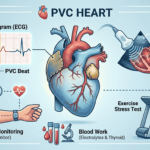
If you are having frequent PVCs—even if you feel otherwise fine—it is still a good idea to schedule a visit with a doctor or cardiologist. They can run a simple ECG (electrocardiogram) or give you a Holter monitor to wear at home to confirm that your heart rhythm is healthy.
Tips to Calm Down PVC Fluttering
If your doctor has confirmed your heart is healthy and your PVCs are harmless, you can reduce how often they happen with simple lifestyle adjustments:
- Cut back on stimulants: Reduce caffeine, energy drinks, and nicotine intake.
- Stay hydrated: Drink plenty of water throughout the day to keep electrolytes balanced.
- Manage stress: Try deep breathing exercises, yoga, or brief walks when feeling overwhelmed.
- Prioritize sleep: Aim for 7 to 9 hours of quality rest every night, as fatigue is a major PVC trigger.
Medical Disclaimer: The information provided in this article is for educational and informational purposes only and is not intended as medical advice, diagnosis, or treatment. Always seek the advice of your physician or another qualified healthcare provider with any questions you may have regarding a medical condition. Never disregard professional medical advice or delay in seeking it because of something you have read on this website. If you think you may have a medical emergency, call 911 or your local emergency services immediately.


![A cardiologist at a medical workstation explaining cardiac data. One screen shows a PVC ectopic beat tracing (wide QRS), and the other display shows an echocardiogram with Ejection Fraction (LVEF) metrics. The PVC HEART logo and a [Medically Reviewed] seal are visible.](https://pvcheart.com/wp-content/uploads/2026/07/Gemini_Generated_Image_wqbyjxwqbyjxwqby-500x330.png)

