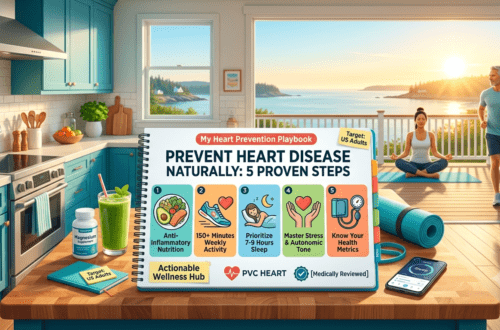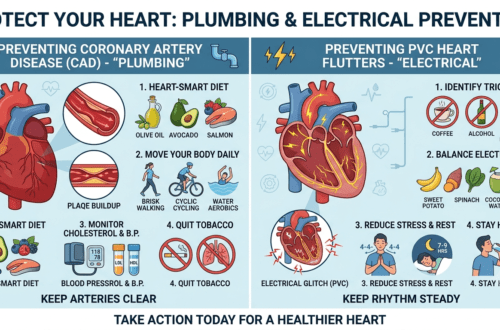






The timeless medical adage “prevention is better than cure“ is nowhere more true than in cardiovascular health. According to European Society of Cardiology (ESC) and American Heart Association (AHA) guidelines, eliminating core behavioral risk factors can prevent up to 80% of premature cardiovascular diseases, heart attacks, and strokes. Taking early action protects arterial walls, reduces the risk of heart rhythm issues like PVCs, and avoids invasive interventions like bypass surgery or catheter ablation.
Modern medicine has achieved incredible breakthroughs: surgeons can bypass blocked arteries, cardiologists can burn away arrhythmogenic pathways, and emergency teams can restore stopped hearts. However, surviving an acute cardiac event or undergoing open-heart surgery is never the ideal outcome. A repaired heart often carries permanent scarring, structural changes, and elevated risks for secondary complications.
Adopting a preventative strategy—focusing on primordial and primary prevention—keeps blood vessels supple, cardiac tissue healthy, and electrical conduction smooth.
The 3 Tiers of Cardiovascular Prevention
Cardiologists categorize preventive medicine into three distinct stages. Understanding where you sit in this spectrum helps dictate your daily health choices:
┌─────────────────────────────────────────────────────────┐
│ 1. Primordial Prevention (Stop Risk Factors Before They Start) │
└────────────────────────────┬────────────────────────────┘
                             │
                             ▼
┌─────────────────────────────────────────────────────────┐
│  2. Primary Prevention (Manage Early Risks: BP, Cholesterol)  │
└────────────────────────────┬────────────────────────────┘
                             │
                             ▼
┌─────────────────────────────────────────────────────────┐
│ 3. Secondary Prevention (Prevent Repeat Attacks / Damage) │
└─────────────────────────────────────────────────────────┘
- Primordial Prevention: Preventing the development of risk factors in the first place (e.g., maintaining healthy blood pressure through youth and adulthood to avoid developing hypertension).
- Primary Prevention: Managing active risk factors (like elevated LDL cholesterol or mild high blood pressure) to prevent a first heart attack or stroke.
- Secondary Prevention: Treating existing heart disease or managing post-surgical recovery to prevent recurrent events and cardiac remodeling.
Why Prevention Trumps Surgical & Medical “Cures”
While medical “cures” save lives during emergencies, primary prevention preserves your long-term quality of life.
| Factor | Surgical/Medical Treatment (“Cure”) | Lifestyle & Medical Prevention |
| Vascular Health | Repairs isolated blockages; doesn’t arrest underlying systemic plaque formation. | Slows or halts plaque buildup throughout the entire arterial tree. |
| Electrical Stability | Relies on medications or ablations to manage arrhythmias. | Optimizes electrolytes, vagal tone, and autonomic nervous system balance naturally. |
| Recovery & Downtime | Requires weeks to months of physical rehabilitation. | Zero surgical downtime; builds daily physical energy and stamina. |
| Financial & Psychological Stress | High healthcare costs, anxiety, and potential procedure risks. | Low-cost, daily habits that reduce chronic stress and anxiety. |
5 Evidence-Based Pillars of Heart Disease Prevention
The American College of Cardiology (ACC) and AHA highlight foundational lifestyle habits that lower cardiovascular risk scores.
1. Adopt an Anti-Inflammatory, Whole-Food Dietary Pattern
Plaque accumulation in coronary arteries is an inflammatory process, not merely a storage issue for cholesterol.
- Focus On: Vegetables, whole fruits, legumes, nuts, whole grains, and fatty fish rich in omega-3 fatty acids (e.g., wild salmon, mackerel).
- Reduce: Trans fats, ultra-processed snack foods, excess sodium, refined sugars, and processed meats.
- Proven Models: The Mediterranean and DASH diets consistently demonstrate significant reductions in primary major adverse cardiac events (MACE).
2. Achieve 150+ Minutes of Weekly Exercise
Physical activity strengthens the myocardium, lowers resting heart rate, improves insulin sensitivity, and increases high-density lipoprotein (HDL) cholesterol.
- Guideline Goals: Accumulate at least 150 minutes of moderate-intensity exercise (like brisk walking at 3–4 mph) or 75 minutes of vigorous exercise (like running or swimming) per week.
- The “J-Curve” Note: While moderate activity protects the heart, extreme, unconditioned exertion can temporarily provoke arrhythmias like Premature Ventricular Contractions (PVCs) in susceptible individuals. Listen to your body and scale exercise intensity gradually.
Sedentary Level ──► High Risk for Metabolic & Heart Disease
Moderate Exercise ──► Lowest Risk Zone (Optimal Heart & Vascular Health)
Extreme Over-Exertion ──► Temporary Spike in Arrhythmia Risk (J-Curve Effect)
3. Maintain Autonomic Balance (Stress & Sleep)
Chronic psychological stress keeps the sympathetic nervous system (“fight-or-flight”) overactive. Elevated adrenaline levels raise blood pressure, increase resting pulse rates, and heighten ventricular irritability—making extra heartbeats (PVCs) far more frequent.
- Prioritize 7 to 9 hours of uninterrupted sleep nightly. Unaddressed sleep apnea significantly increases the risk of hypertension and atrial fibrillation.
- Practice vagal nerve-stimulating techniques such as diaphragmatic breathing, meditation, and structured nature walks.
4. Eliminate Tobacco and Limit Stimulants
Smoking damages the endothelial lining of arterial walls, encourages blood clotting, and lowers circulating oxygen levels.
- The Good News: Within 24 hours of quitting tobacco, your risk for acute heart attack begins to decline.
- Stimulant Moderation: Excessive intake of caffeine, energy drinks, and certain over-the-counter decongestants can trigger heart palpitations and sudden spikes in blood pressure.
5. Know Your Numbers (Screening & Risk Assessment)
Preventive cardiology relies on early detection long before symptoms appear. Schedule routine annual checkups to track your core health metrics:
| Health Metric | Optimal Target Range | Why It Matters for Prevention |
| Blood Pressure | $< 120/80 \text{ mmHg}$ | Uncontrolled high blood pressure hardens arteries and enlarges the heart muscle. |
| Fasting Blood Glucose | $< 100 \text{ mg/dL}$ (HbA1c $< 5.7\%$) | Diabetes doubles the risk of developing silent coronary artery disease. |
| ApoB / Non-HDL Cholesterol | Varies by individual risk ($< 100 \text{ mg/dL}$) | Measures total atherogenic particles carrying cholesterol through arteries. |
| Resting Heart Rate | $55 – 75 \text{ BPM}$ | Lower resting heart rates indicate efficient cardiac stroke volume and lower cardiovascular strain. |
How Heart Prevention Stops Irregular Rhythms (PVCs)
Many individuals assume heart prevention only applies to blocked arteries (heart attacks). However, lifestyle prevention directly protects your heart’s electrical system, too.
          PREVENTION PATHWAY FOR ELECTRICAL STABILITY

 Healthy Lifestyle Choices (Diet, Exercise, Low Stress)
                       │
                       ▼
 Lower Systemic Inflammation & Balanced Electrolytes (Magnesium/Potassium)
                       │
                       ▼
 Reduced Ventricular Irritability & Reduced Ectopic Firing
                       │
                       ▼
  FEWER PREMATURE VENTRICULAR CONTRACTIONS (PVCs) & PALPITATIONS
Premature Ventricular Contractions (PVCs) occur when ectopic foci in the ventricles fire before the heart’s natural pacemaker (the SA node) signals. While isolated PVCs are often benign, a high frequency of ectopic beats can be triggered by:
- Systemic inflammation and high blood pressure.
- Electrolyte imbalances (low magnesium or potassium levels).
- Chronic stress and elevated circulating catecholamines.
By controlling risk factors early, you preserve normal cardiac electrophysiology, reduce uncomfortable palpitations, and prevent long-term arrhythmia-induced cardiomyopathy.
Step-by-Step Action Plan to Start Your Prevention Journey
Transitioning to a heart-healthy lifestyle does not require an overnight overhaul. Follow this structured roadmap:
1.Step 1: Get a Baseline Risk Score:Medical Assessment.
Schedule an annual physical with your primary care physician to measure blood pressure, fasting lipids, blood glucose, and calculate your 10-year cardiovascular risk score.
2.Step 2: Upgrade Your Daily Nutrition:Dietary Adjustments.
Swap out processed, high-sodium foods for whole foods. Add one extra serving of leafy greens and a portion of nuts or seeds to your daily routine.
3.Step 3: Establish a Consistent Walk Habit:Physical Activity.
Commit to a 20-to-30-minute daily brisk walk. Consistency matters far more for cardiovascular fitness than occasional high-intensity workouts.
4.Step 4: Monitor Palpitations and Rest:Rhythm & Stress Audit.
Track triggers like stress, poor sleep, or excessive caffeine if you experience skipped beats or PVCs. Implement continuous sleep hygienic practices.
Frequently Asked Questions (FAQ)
Is it ever too late to start heart disease prevention?
No. Research demonstrates that even individuals in their 60s, 70s, or those recovering from prior cardiac events experience reductions in mortality and secondary heart attacks when adopting heart-healthy lifestyle modifications.
Can a healthy lifestyle reverse existing coronary plaque?
While complete reversal is rare, rigorous risk factor control—combining low-saturated-fat nutrition, regular aerobic exercise, and medical therapy (like statins) when indicated—can stabilize arterial plaque, preventing it from expanding or rupturing.
Can prevention eliminate PVC heart palpitations completely?
In many cases, lifestyle adjustments dramatically reduce PVC burden. Correcting electrolyte deficiencies, cutting out tobacco and excess caffeine, managing anxiety, and lowering blood pressure often calm the heart’s electrical system without requiring antiarrhythmic medications.
Medical Disclaimer: The content on PVC Heart is for informational and educational purposes only and is medically reviewed to ensure accuracy. It is not intended as medical advice or a substitute for professional clinical evaluation. Always consult a qualified physician or cardiologist regarding any heart condition, symptoms, or medical decisions. In an emergency, call 911 immediately.