





The world of medicine in the United States is changing faster than ever before. For a long time, healthcare was mostly “reactive.” This means a person got sick, went to the doctor, and received a treatment. Today, in 2026, medicine is becoming “proactive.” Thanks to new technology, doctors can now spot health problems early, tailor treatments to your exact DNA, and even prevent diseases before you feel sick.
New rules from the US government and changes in health insurance are helping these modern medical tools move quickly out of science labs and into neighborhood clinics. This article breaks down the top five medical breakthroughs of 2026 in simple, easy-to-understand words.
1. AI in Medicine: Your Doctor’s New Smart Assistant
Artificial Intelligence (AI) is no longer just a futuristic concept. In 2026, it has become an everyday tool in American hospitals and clinics.
Instead of using general computer programs, hospitals are now using specialized Clinical AI Agents. Think of these as super-smart digital assistants for your doctor. These tools can look at a patient’s entire medical history, family genetics, and data from smartwatches in just a few seconds.
[Patient Data Intake] ──> [Clinical AI Assistant] ──> [Scans Latest Medical Studies]
                                                                 │
                                                                 ▼
                                                  [Flags Risks & Offers Second Opinion]
Making Doctor Visits Better
If you have visited a doctor recently, you might have noticed them spending less time typing on a computer. This is because of ambient AI technology. These systems listen to the conversation between you and your doctor, safely and privately, and write the medical notes automatically.
This gives doctors more time to look you in the eye and listen to your concerns. The US government has also created clear rules to make sure health insurance pays for these AI tools, ensuring they are safe, accurate, and helpful for patients.
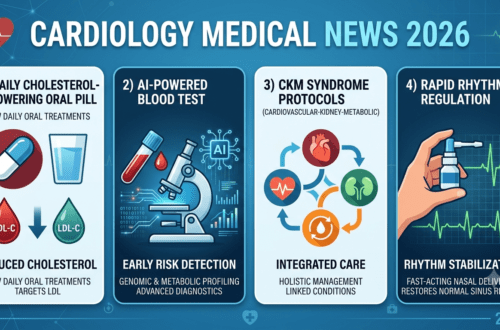
2. Reimagined Blood Testing: Catching Cancer Early
One of the most exciting breakthroughs of 2026 is the evolution of liquid biopsies. These are advanced blood tests that can find serious diseases long before you feel sick or show symptoms.
[Simple Blood Draw] ──> [Advanced Lab Scanner] ──> [Finds Hidden Disease Signs (DNA)]
                                                                  │
                                                                  ▼
                                                   [Detects Up to 50+ Cancer Types]
How a Single Drop Can Save Lives
When bad cells—like cancer cells—begin to grow, they leave tiny traces of their DNA in your bloodstream. New microfluidic tech allows labs to run dozens of complex checks on very small blood samples.
Important Step Forward: New blood tests approved by the Food and Drug Administration (FDA) can now check for over 50 different types of cancer at the same time using a single blood draw.
Catching a disease early makes it much easier to treat and cure. It also saves families from the emotional and financial stress of long, late-stage hospital treatments.
3. Personalized Medicine: Treatments Made Just for Your DNA
For generations, medicine followed a “one-size-fits-all” model. If two people had the same disease, they usually got the exact same pill. In 2026, the US healthcare system is moving toward hyper-personalized medicine.
Doctors now use rapid genetic testing to see how your unique body will react to different medications. This helps them choose the exact pill and dose that will work best for you while avoiding bad side effects.
Everyday Healthcare Personalization
This trend is highly popular among younger Americans who expect custom-tailored care. By pairing DNA testing with health data from everyday wearables, doctors can design personalized wellness plans that fit your lifestyle, your body chemistry, and your specific health goals.
4. Custom Gene Editing: Curing the Incurable
CRISPR is a word you will hear a lot in 2026. It is a powerful technology that works like a pair of “molecular scissors” to edit human DNA. It allows scientists to cut out damaged or broken parts of a gene and replace them with healthy code.
[Scan Patient DNA] ──> [Find the Broken Gene] ──> [Apply CRISPR Gene Scissors]
                                                                │
                                                                ▼
                                                   [Fix the Code Permanently]
Real Cures for Real People
In the past, gene therapies were incredibly complex and had to be done outside the body in special laboratories. Today, new delivery methods allow doctors to give the treatment directly to the patient via a simple injection or IV.
Scientists are successfully using this tech to treat lifelong conditions like sickle cell anemia, muscular dystrophy, and specific heart conditions. Instead of taking medicine for the rest of their lives, patients are finding permanent molecular cures.
5. Virtual Hospitals and At-Home Care
The way Americans physically go to the doctor is shifting dramatically. The traditional hospital is no longer the automatic center of medical care. In 2026, hospitals are reserved for emergencies and major surgeries, while routine care is moving to Virtual Hospitals and local outpatient centers.
Traditional Care:  [Feel Sick] ──> [Drive to Hospital] ──> [Wait in Waiting Room]
2026 Modern Care:  [Wearable Alerts Doctor] ──> [Virtual 3D Chat] ──> [At-Home Delivery]
The Rise of Virtual Health Tech
Thanks to smart wearable health devices, doctors can now track your heart rate, blood pressure, and oxygen levels safely from your own home. If a device sees a problem, it sends a secure alert to your healthcare provider so they can call you before a small problem becomes a medical emergency.
Furthermore, some doctors are using Virtual Reality (VR) tools to meet with patients inside 3D spaces, making virtual checkups feel much more interactive and personal.
How This Changes US Healthcare for You
These five medical innovations are making healthcare easier to access, faster, and much more accurate. Because of new insurance rules, many complex procedures can now be performed safely at independent, local care centers rather than expensive, crowded city hospitals.
At the same time, new laws are forcing medical companies to be open and transparent about their prices. With the help of AI health tools, American consumers can easily look up costs and compare doctors before scheduling an appointment.
The medical breakthroughs of 2026 are not just exciting science experiments; they are practical tools designed to help you live a longer, happier, and healthier life.
Medical Disclaimer
Educational Purpose Only: This article is written only to teach and inform readers about new medical technology trends. It does not provide professional medical advice, diagnosis, or treatment.
Healthcare laws, medical technology, and doctor guidelines change frequently. Always talk to a licensed doctor or a qualified healthcare provider in the United States if you have questions about a medical condition, a new treatment, or your personal health needs. Never ignore professional medical advice because of something you read online.