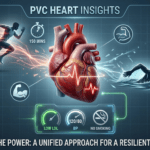







Discovering that your heart is skipping beats, fluttering, or pounding out of nowhere can be an incredibly unsettling experience. In the medical world, these early, extra heartbeats that originate in the lower chambers of your heart are known as Premature Ventricular Contractions (PVCs).
Health Answers by Pfizer
While many people live with occasional flutters without ever needing medical intervention, others experience a high “PVC burden”—where thousands of extra beats occur daily—leading to fatigue, dizziness, and anxiety. If you or a loved one is navigating this condition, understanding your options for PVC heart treatment is the first step toward reclaiming your peace of mind and protecting your long-term cardiovascular health.
This comprehensive guide breaks down the full spectrum of modern treatment strategies used by electrophysiologists and cardiologists in the United States today, ranging from simple lifestyle adjustments to advanced, minimally invasive procedures.
Do All PVCs Require Treatment?
Before diving into specific medical therapies, it is crucial to understand how healthcare providers evaluate a patient’s need for intervention. For the vast majority of individuals with anatomically healthy hearts, occasional PVCs are entirely benign.They are more of an annoyance than a health hazard.
Michigan Medicine
Cardiologists typically categorize the need for treatment based on three primary factors:
- Symptom Severity: Are the palpitations causing significant daily disruption, sleep loss, or severe health anxiety?
- The PVC Burden: This is measured via a 24-hour or multi-day Holter monitor. The burden is the percentage of total daily heartbeats that are PVCs. A burden below 10% rarely requires aggressive therapy, whereas a burden greater than 10% to 15% places a higher workload on the heart muscle. European Society of Cardiology
- Presence of Underlying Structural Heart Disease: If a patient has a history of a previous heart attack, coronary artery disease, or heart failure, even low numbers of PVCs require careful management to prevent more serious ventricular arrhythmias.
When PVCs Become a Concern: If frequent, untreated PVCs persist at a high burden (over 10-15% of all daily beats) for months or years, they can lead to PVC-induced cardiomyopathy—a condition where the heart muscle stretches and weakens. Fortunately, clinical studies show this condition is highly reversible once the proper treatment is established.
Cleveland Clinic
Step 1: Identifying and Eliminating Reversible Triggers
For many individuals, the most effective PVC heart treatment does not start in a pharmacy or an operating room. It begins with a personal diary tracking daily habits.The heart’s electrical conduction system is highly sensitive to external stimulants and internal chemical balances.
Mayo Clinic
Managing Stimulants and Lifestyle Factors
The nervous system heavily influences ectopic (abnormal) heart tissue. Eliminating or significantly reducing the following known triggers can drop your PVC count dramatically:
- Caffeine and Alcohol: While mild intake is acceptable for some, excessive caffeine or alcohol consumption can destabilize the electrical signals in the ventricles. Health Answers by Pfizer
- Nicotine and Tobacco Products: Nicotine is a potent cardiac stimulant that directly increases heart rate and triggers irritability in the myocardial cells.
- Inadequate Sleep and Fatigue: Chronic exhaustion elevates baseline stress hormones, making the heart more susceptible to extra beats.
- Emotional Stress and Anxiety: High stress drives up adrenaline, which directly feeds automaticity—the property that causes a cluster of heart cells to fire out of turn. Cedars-Sinai
Correcting Underlying Metabolic & Chemical Imbalances
During your initial medical workup, your care team will order blood tests to rule out systemic issues that mimic or worsen cardiac arrhythmias.Correcting these underlying causes often resolves the PVCs entirely:
NewYork-Presbyterian Hospital
| Metabolic Trigger | Why It Impacts the Heart |
|---|---|
| Hypokalemia (Low Potassium) | Potassium regulates the resting electrical potential of heart cells. Low levels cause cellular instability. |
| Hypomagnesemia (Low Magnesium) | Magnesium acts as a natural gatekeeper for calcium in heart tissue; deficiency causes hyper-irritable cells. |
| Hyperthyroidism (Overactive Thyroid) | An excess of thyroid hormone accelerates the entire metabolic system, forcing the heart to beat faster and more erratically. |
Step 2: First-Line Medical Therapies
When lifestyle modifications are not enough to control frequent or highly symptomatic PVCs, doctors turn to pharmacological treatments. These medications are primarily designed to slow down the heart rate, lower the force of contractions, and quiet down irritable electrical pathways.
Mayo Clinic
1. Beta-Blockers
Beta-blockers are the most frequently prescribed first-line medication for PVC management. They work by blocking the effects of adrenaline (epinephrine) on your body’s beta receptors, effectively preventing stress hormones from over-stimulating the heart muscle.
- Common Options: Metoprolol (Toprol-XL), Atenolol, and Propranolol.
- Best Suited For: Patients whose PVCs are clearly worsened by stress, anxiety, or physical exertion.
- What to Expect: Beta-blockers are highly effective at making the remaining PVCs feel much less forceful, even if they do not eliminate every single extra beat.
2. Calcium Channel Blockers
If a patient cannot tolerate beta-blockers due to underlying conditions like asthma or severe fatigue, calcium channel blockers are an excellent alternative. These medications relax blood vessels and slow the electrical conduction through the heart muscle by regulating how calcium enters the cells.
Health Answers by Pfizer
- Common Options: Verapamil and Diltiazem. American Heart Association Journals
- Best Suited For: Symptomatic patients with structurally normal hearts who require an alternative to beta-blocking agents.
3. Antiarrhythmic Medications
In cases where standard blood pressure medications fail to provide relief, specialized antiarrhythmic drugs may be utilized. These powerful medications directly alter the sodium, potassium, or calcium channels within the heart’s cells to suppress abnormal rhythms.
Health Answers by Pfizer
- Common Options: Flecainide, Propafenone, and Amiodarone.
- Clinical Considerations: Because these drugs carry a higher risk of side effects and require careful monitoring, cardiologists typically reserve them for highly symptomatic cases or patients who are not candidates for procedural interventions.
Step 3: Advanced Treatment via Catheter Ablation
For individuals who do not want to take daily medications long-term, those who experience intolerable side effects, or those dealing with a high PVC burden that threatens to weaken the heart muscle, radiofrequency catheter ablation stands out as an incredibly effective, definitive treatment.
Medical News Today
Catheter ablation boasts a high success rate (often exceeding 80% to 90% depending on where the abnormal signals originate) and offers the potential for a permanent cure.
How the Procedure Works
An electrophysiologist (a cardiologist specializing in heart rhythms) performs this minimally invasive procedure in a dedicated cardiac catheterization laboratory.1Vascular Access and Catheter InsertionStep 1: Preparation
1.Vascular Access and Catheter Insertion:Step 1: Preparation.
The medical team applies local anesthesia to the groin area. They insert thin, flexible tubes called catheters into a blood vessel (usually the femoral vein) and carefully guide them up to the inside of the heart using real-time X-ray imaging.
2
3D Electroanatomical Mapping
Step 2: Locating the Source
2.3D Electroanatomical Mapping:Step 2: Locating the Source.
Specialized mapping computers track the catheters inside the heart chambers. The doctor waits for a PVC to occur, allowing the system to pinpoint the exact millimeters of tissue where the abnormal electrical spark originates.3Energy Application (Ablation)Step 3: Neutralizing the Cells
3.Energy Application (Ablation):Step 3: Neutralizing the Cells.
Once the precise origin point is mapped, the tip of the ablation catheter delivers targeted thermal energy—either radiofrequency heat or cryo-energy (freezing)—to create a tiny, microscopic scar.4Validation and RecoveryStep 4: Post-Procedure
4.Validation and Recovery:Step 4: Post-Procedure.
The scar tissue acts as an electrical barrier, completely blocking the abnormal signals from escaping. The catheters are removed, and the patient rests flat for a few hours. Most individuals go home the exact same day.
Creating Your Long-Term Heart Health Roadmap
Managing PVCs successfully requires an individualized approach. What works perfectly for an athlete dealing with stress-induced flutters might look completely different from the treatment plan for an individual managing age-related cardiovascular changes.
If you are experiencing ongoing heart flutters, work closely with a healthcare professional to build a plan tailored to your body. Keep an accurate log of your triggers, ask your physician about your specific PVC burden percentage from your Holter monitoring, and discuss whether lifestyle changes, daily medications, or a curative mapping procedure align best with your long-term wellness goals.
Disclaimer:The information provided in this article is intended strictly for educational and search-engine optimization purposes. It should not be used as a substitute for professional medical advice, diagnosis, or treatment. Always consult with a licensed cardiologist or electrophysiologist in the United States regarding any heart rhythm concerns or before altering your healthcare regimen.


