






Heart disease remains the leading cause of death in the United States, crossing boundaries of age, gender, and socioeconomic background. According to the Centers for Disease Control and Prevention (CDC), approximately one person dies every 33 seconds in the United States from cardiovascular disease.
Despite these stark statistics, there is a profound silver lining: a vast majority of heart disease cases are highly preventable through lifestyle modifications, early detection, and informed medical care. This comprehensive guide breaks down everything you need to know about heart health, from identifying structural types of heart conditions to actionable, everyday preventative habits.
What Exactly is Heart Disease?
While often used as a singular term, heart disease actually serves as an umbrella category for a wide array of conditions affecting the structure and function of the cardiovascular system. The terms “heart disease” and “cardiovascular disease” are frequently interchanged, but cardiovascular disease specifically refers to conditions involving narrowed or blocked blood vessels, while heart disease encompasses all abnormalities of the heart muscle, valves, and rhythms.
To protect your health, it helps to understand the distinct ways the heart can experience complications.
The Major Types of Heart Disease
1. Coronary Artery Disease (CAD)
Coronary Artery Disease is by far the most prevalent form of heart disease in the U.S. It occurs when cholesterol-rich deposits, known as plaque, build up inside the coronary arteries—the main vessels supplying oxygenated blood to the heart itself.
Over time, this process, called atherosclerosis (hardening of the arteries), narrows the arterial pathways. When blood flow is restricted, it causes chest pain (angina). If a piece of plaque ruptures, it can form a blood clot that completely blocks the artery, resulting in a myocardial infarction, or heart attack.
2. Arrhythmias (Irregular Heart Rhythms)
An arrhythmia is a disruption in the electrical impulses that coordinate your heartbeat. When these signals malfunction, the heart may beat too fast (tachycardia), too slowly (bradycardia), or erratically.
The most frequent clinically significant arrhythmia is Atrial Fibrillation (AFib). AFib causes the heart’s upper chambers to quiver instead of beating effectively, which allows blood to pool and significantly increases the risk of stroke.
3. Heart Failure
Congestive heart failure does not mean the heart has completely stopped working; rather, it means the heart muscle has become too weak or stiff to pump blood efficiently enough to meet the body’s metabolic demands. Heart failure often develops after other conditions, like CAD or high blood pressure, have left the heart damaged or overworked.
4. Heart Valve Disease
The human heart relies on four specialized valves (aortic, mitral, tricuspid, and pulmonary) to keep blood flowing in a single, correct direction. Valve disease occurs when these valves either fail to open fully (stenosis), restricting blood flow, or fail to close tightly (regurgitation or insufficiency), causing blood to leak backward.
5. Cardiomyopathy
Cardiomyopathy is a progressive disease of the myocardium (the heart muscle itself). The muscle can become abnormally enlarged, thickened, or rigid. As the condition worsens, the heart struggles to pump effectively, frequently culminating in heart failure or chronic arrhythmias.
6. Congenital Heart Defects
Unlike conditions that develop over a lifetime, congenital heart defects are structural abnormalities present at birth. These can range from minor issues, such as small holes in the interior walls of the heart, to severe structural malformations that alter how blood cycles through the body.
Recognising the Silent and Sudden Symptoms
One of the most dangerous aspects of cardiovascular conditions is that they can progress silently for decades without causing a single symptom. For millions of Americans, the very first outward sign of heart disease is a sudden cardiac event.
However, paying close attention to subtle shifts in your physical well-being can be lifesaving. Common warning signs include:
- Chest Discomfort: This is the most universal sign of a heart issue. It may present as pressure, tightness, squeezing, or a burning sensation in the center of the chest, often lasting more than a few minutes or resolving and returning.
- Shortness of Breath: Experiencing unexplained breathlessness, especially during routine daily tasks or while resting, can point to the heart’s inability to properly circulate oxygen.
- Pain Radiating to the Upper Body: Discomfort originating in the chest can travel upward to the neck, jaw, or throat, or radiate down the left arm and back.
- Dizziness and Lightheadedness: Feeling faint or losing balance, particularly when combined with chest discomfort, requires immediate medical evaluation.
- Unusual Fatigue: Extreme, unexplained exhaustion that lasts for days—such as feeling completely wiped out from simply making the bed—is a frequent symptom reported by women in the weeks leading up to a heart attack.
Critical Note: Women, older adults, and individuals with diabetes are far less likely to experience classic “crushing chest pain.” Instead, they are more prone to reporting shortness of breath, profound fatigue, nausea, back pain, or indigestion during a cardiac event.
Root Causes and Compounding Risk Factors
Understanding what drives heart disease is the first step toward reclaiming your health. Risk factors generally fall into two categories: modifiable factors (things you can change) and non-modifiable factors (things you cannot change).
Non-Modifiable Risk Factors
- Age: The risk of damaged and narrowed arteries increases as you get older.
- Biological Sex: Men are generally at a higher risk for coronary artery disease earlier in life. However, women’s risk increases sharply after menopause, catching up to men by age 65.
- Family History: A genetic predisposition to early heart disease (having a father or brother diagnosed before age 55, or a mother or sister before age 65) significantly increases personal vulnerability.
Modifiable Risk Factors
- High Blood Pressure (Hypertension): Uncontrolled high blood pressure forces the heart to work harder to circulate blood, causing the heart muscle to thicken and stiffen over time while damaging the delicate inner linings of your arteries.
- High Blood Cholesterol: Elevated levels of Low-Density Lipoprotein (LDL, or “bad” cholesterol) promote the accumulation of arterial plaque.
- Obesity and Physical Inactivity: A sedentary lifestyle contributes directly to metabolic dysfunction, inflammation, and extra strain on the circulatory system.
- Type 2 Diabetes: High blood sugar levels from diabetes damage blood vessels and the nerves that control your heart over time.
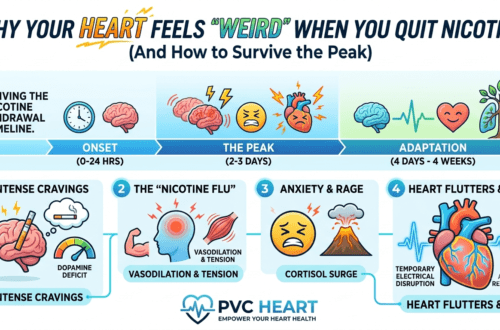
- Smoking and Vaping: Tobacco smoke contains chemicals that damage blood cells, increase plaque buildup, and cause blood vessels to constrict, doubling the risk of ischemic heart illness.
Diagnostic Tools: How Doctors Evaluate Your Heart
Modern cardiology utilizes an impressive suite of non-invasive and invasive diagnostic tests to evaluate heart health before a crisis occurs:
| Diagnostic Test | What It Measures / Detects |
|---|---|
| Electrocardiogram (ECG/EKG) | Records the electrical signals of the heart to identify arrhythmias or signs of a previous heart attack. |
| Echocardiogram | An ultrasound of the heart that creates moving images of the chambers and valves, checking structural integrity and pumping strength. |
| Stress Testing | Tracks how your heart performs under physical exertion (usually walking on a treadmill) while hooked up to monitors. |
| Coronary CT Angiography | A specialized X-ray scan that uses contrast dye to look for calcium deposits and blockages inside your coronary arteries. |
| Cardiac Catheterization | An invasive procedure where a thin tube is guided into the heart to directly visualize blockages and measure pressures. |
Prevention: The Ultimate Strategy for Longevity
The ultimate weapon against cardiovascular disease is prevention. Transitioning to a heart-healthy lifestyle can reduce your total risk of heart disease by up to 80%.
1. Adopt a Cardioprotective Diet
Shift your eating habits toward whole, nutrient-dense foods. The Mediterranean diet and the DASH (Dietary Approaches to Stop Hypertension) diet are widely backed by clinical research. Prioritize:
- Leafy Greens and Vegetables: Packed with vitamins, minerals, and nitrates that help relax blood vessels.
- Omega-3 Fatty Acids: Found abundantly in wild-caught salmon, walnuts, and flaxseeds, these reduce systemic inflammation and lower triglycerides.
- Whole Grains: Oatmeal, quinoa, and brown rice provide soluble fiber, which actively binds to cholesterol in the digestive tract and clears it from the body.
- Limiting Sodium and Added Sugars: Excess sodium spikes blood pressure, while processed sugars fuel systemic inflammation.
2. Prioritize Consistent Physical Activity
Aim for at least 150 minutes of moderate-intensity aerobic exercise (like brisk walking, cycling, or swimming) or 75 minutes of vigorous exercise per week, combined with two days of muscle-strengthening activities. Exercise strengthens the heart muscle, increases the efficiency of oxygen extraction, and improves insulin sensitivity.
3. Manage Chronic Stress and Sleep
Chronic emotional stress elevates cortisol and adrenaline levels, increasing heart rate and blood pressure. Incorporate daily stress-reduction habits such as mindfulness meditation, deep breathing exercises, or outdoor walks. Additionally, aim for 7 to 9 hours of quality sleep nightly; chronic sleep deprivation is strongly linked to hypertension and metabolic syndromes.
4. Know Your Key Health Metrics
Partner with your primary care provider to establish and monitor your baseline numbers annually:
- Blood Pressure: Target keeping it under 120/80 mmHg.
- Fasting Blood Glucose: Ideally under 100 mg/dL.
- Lipid Panel: Keeping tabs on Total Cholesterol, HDL, LDL, and Triglycerides.
Final Thoughts: Taking Control of Your Health Journey
Heart disease is incredibly formidable, but it is far from an inevitable fate. By understanding the underlying mechanics of your cardiovascular system, recognizing the diverse array of symptoms, and systematically addressing modifiable risk factors, you take the driver’s seat of your long-term health. Small, everyday modifications—choosing a balanced meal, going for a twenty-minute walk, or scheduling that routine annual physical checkup—are the fundamental building blocks of a resilient, long-lived heart.
SEO Meta Data (Optimized for US Audience)
SEO Title Options
- Primary: Heart Disease Guide: Types, Symptoms, Causes & Prevention
- Alternative: Understanding Heart Disease: Causes, Symptoms & Prevention Tips
Meta Description
Discover the leading types of heart disease, critical warning symptoms, root causes, and science-backed prevention strategies to protect your cardiovascular health.
Focus Keywords & Search Terms
- heart disease types
- symptoms of heart disease
- coronary artery disease prevention
- cardiovascular disease risk factors
- preventing heart attacks US
SEO Tags / Keywords
Heart disease symptoms, cardiovascular health, coronary artery disease, arrhythmia causes, congestive heart failure, prevent heart attack, lowering high blood pressure, heart health tips, DASH diet, US cardiovascular health statistics, heart valve disease signs, atherosclerosis risk factors.