





1. Nutrition & Heart Health
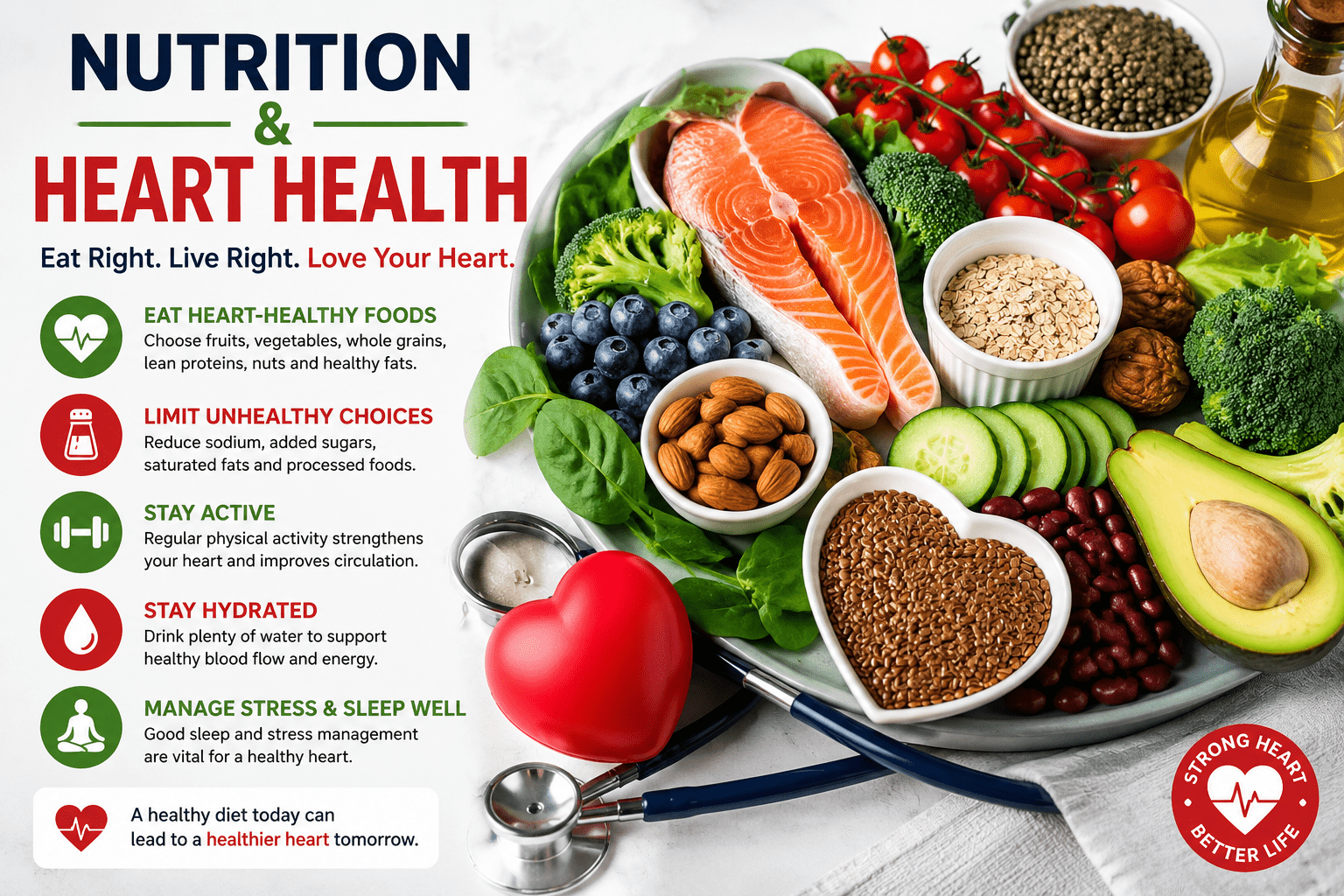
Good nutrition and heart health go hand in hand. A balanced diet can support healthy blood pressure, cholesterol levels, weight, and overall cardiovascular wellness. Focus on nutrient-rich foods such as fruits, vegetables, whole grains, beans, nuts, seeds, fish, and other lean protein sources.
For better heart health, choose foods rich in fiber and unsaturated fats while limiting excessive sodium, added sugars, saturated fats, and highly processed foods. Drinking enough water and maintaining sensible portions can also support a healthy lifestyle.
A heart-healthy eating pattern does not need to be complicated. Start by adding more colorful vegetables to meals, choosing whole grains instead of refined grains, and replacing some foods high in saturated fat with healthier unsaturated-fat options.
Nutrition is one important part of cardiovascular wellness, along with regular physical activity, adequate sleep, stress management, and routine medical care. If you have a heart condition or concerns about symptoms, speak with a qualified healthcare professional before making major dietary changes.
2. Heart-Healthy Foods
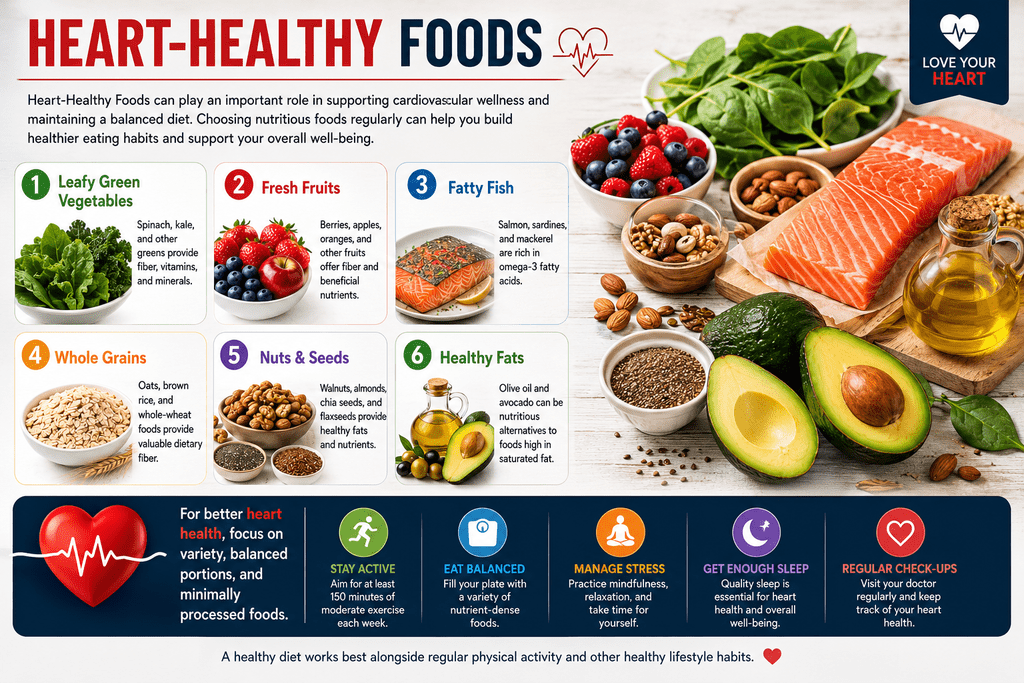
Heart-Healthy Foods can play an important role in supporting cardiovascular wellness and maintaining a balanced diet. Choosing nutritious foods regularly can help you build healthier eating habits and support your overall well-being.
🥦 1. Leafy Green Vegetables — Spinach, kale, and other greens provide fiber, vitamins, and minerals.
🍓 2. Fresh Fruits — Berries, apples, oranges, and other fruits offer fiber and beneficial nutrients.
🐟 3. Fatty Fish — Salmon, sardines, and mackerel are rich in omega-3 fatty acids.
🌾 4. Whole Grains — Oats, brown rice, and whole-wheat foods provide valuable dietary fiber.
🥜 5. Nuts & Seeds — Walnuts, almonds, chia seeds, and flaxseeds provide healthy fats and nutrients.
🫒 6. Healthy Fats — Olive oil and avocado can be nutritious alternatives to foods high in saturated fat.
❤️ For better heart health, focus on variety, balanced portions, and minimally processed foods. A healthy diet works best alongside regular physical activity and other healthy lifestyle habits.
3. Foods to Limit
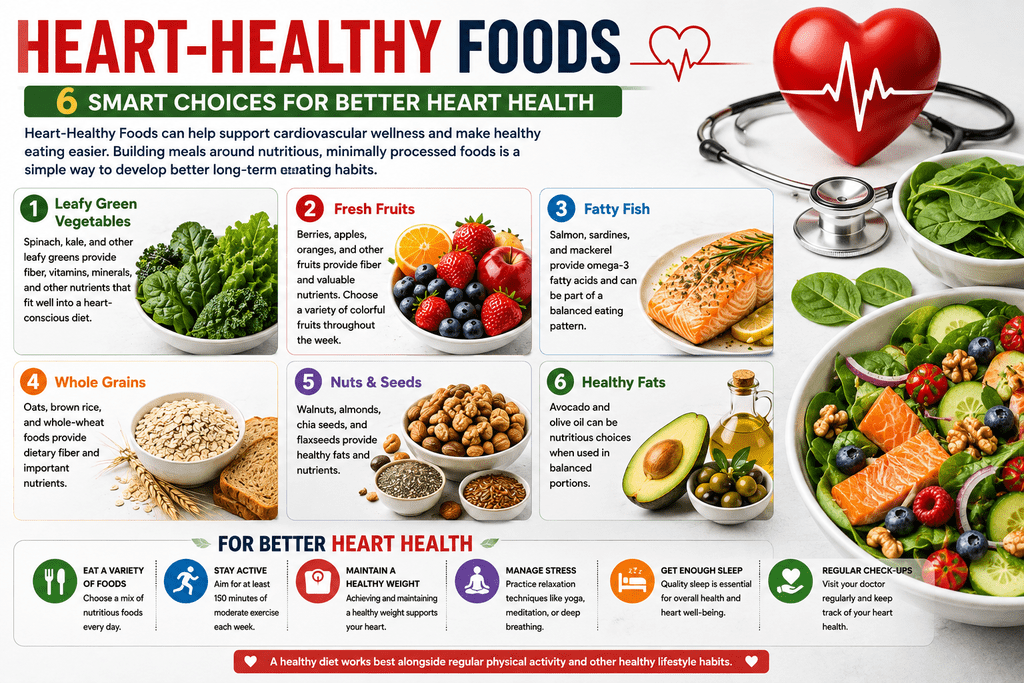
Heart-Healthy Foods can help support cardiovascular wellness and make healthy eating easier. Building meals around nutritious, minimally processed foods is a simple way to develop better long-term eating habits.
🥬 Leafy Green Vegetables
Spinach, kale, and other leafy greens provide fiber, vitamins, minerals, and other nutrients that fit well into a heart-conscious diet.
🍓 Fresh Fruits
Berries, apples, oranges, and other fruits provide fiber and valuable nutrients. Choose a variety of colorful fruits throughout the week.
🐟 Fatty Fish
Salmon, sardines, and mackerel provide omega-3 fatty acids and can be part of a balanced eating pattern.
🌾 Whole Grains
Oats, brown rice, and whole-wheat foods provide dietary fiber and important nutrients.
🥜 Nuts & Seeds
Walnuts, almonds, chia seeds, and flaxseeds provide healthy fats and nutrients.
🥑 Healthy Fats
Avocado and olive oil can be nutritious choices when used in balanced portions.
❤️ For better heart health, combine nutritious eating with regular physical activity and other healthy habits.
4. Nutrition for Blood Pressure
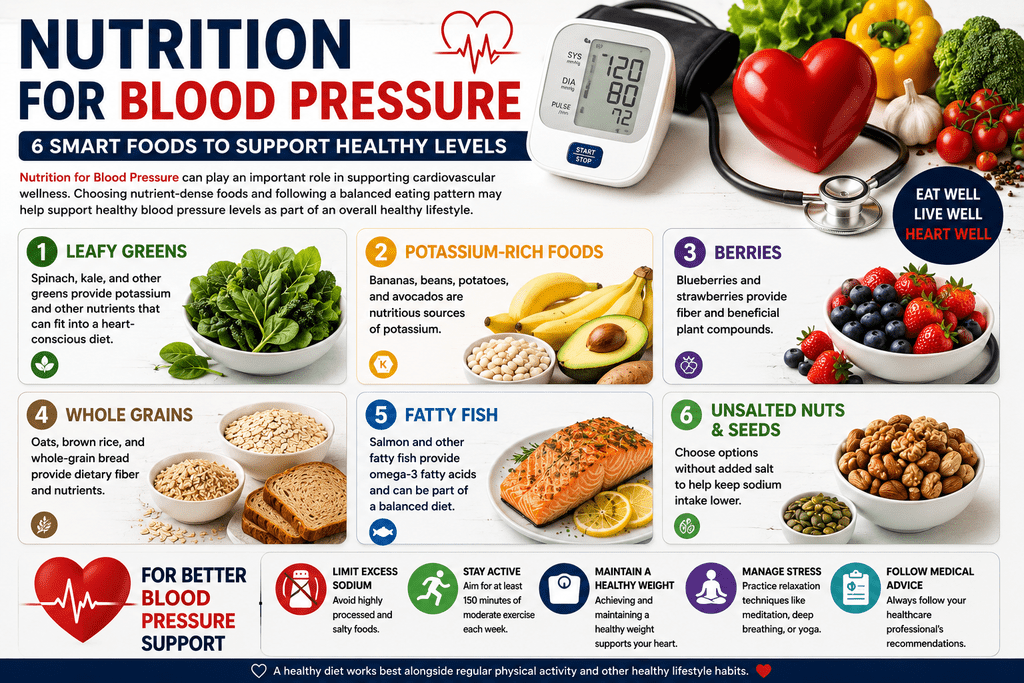
Nutrition for Blood Pressure can play an important role in supporting cardiovascular wellness. Choosing nutrient-dense foods and following a balanced eating pattern may help support healthy blood pressure levels as part of an overall healthy lifestyle.
🥬 1. Leafy Greens — Spinach, kale, and other greens provide potassium and other nutrients that can fit into a heart-conscious diet.
🍌 2. Potassium-Rich Foods — Bananas, beans, potatoes, and avocados are nutritious sources of potassium.
🫐 3. Berries — Blueberries and strawberries provide fiber and beneficial plant compounds.
🌾 4. Whole Grains — Oats, brown rice, and whole-grain bread provide dietary fiber and nutrients.
🐟 5. Fatty Fish — Salmon and other fatty fish provide omega-3 fatty acids and can be part of a balanced diet.
🥜 6. Unsalted Nuts & Seeds — Choose options without added salt to help keep sodium intake lower.
❤️ For better blood pressure support, limit excess sodium and highly processed foods, stay active, maintain a healthy weight, and follow your healthcare professional’s advice.
5. Nutrition & Cholesterol
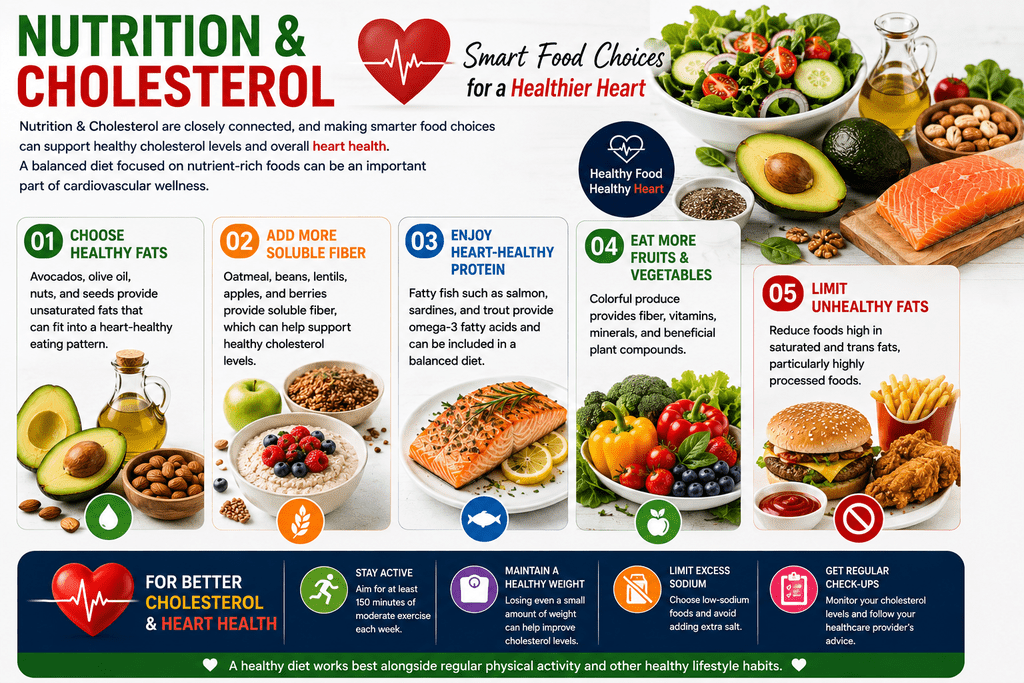
Nutrition & Cholesterol are closely connected, and making smarter food choices can support healthy cholesterol levels and overall heart health. A balanced diet focused on nutrient-rich foods can be an important part of cardiovascular wellness.
🥑 Choose Healthy Fats
Avocados, olive oil, nuts, and seeds provide unsaturated fats that can fit into a heart-healthy eating pattern.
🌾 Add More Soluble Fiber
Oatmeal, beans, lentils, apples, and berries provide soluble fiber, which can help support healthy cholesterol levels.
🐟 Enjoy Heart-Healthy Protein
Fatty fish such as salmon, sardines, and trout provide omega-3 fatty acids and can be included in a balanced diet.
🥦 Eat More Fruits & Vegetables
Colorful produce provides fiber, vitamins, minerals, and beneficial plant compounds.
🚫 Limit Unhealthy Fats
Reduce foods high in saturated and trans fats, particularly highly processed foods.
❤️ For better cholesterol and heart health, combine nutritious eating with regular physical activity and follow your healthcare .
6.Nutrition & PVC Heart Health
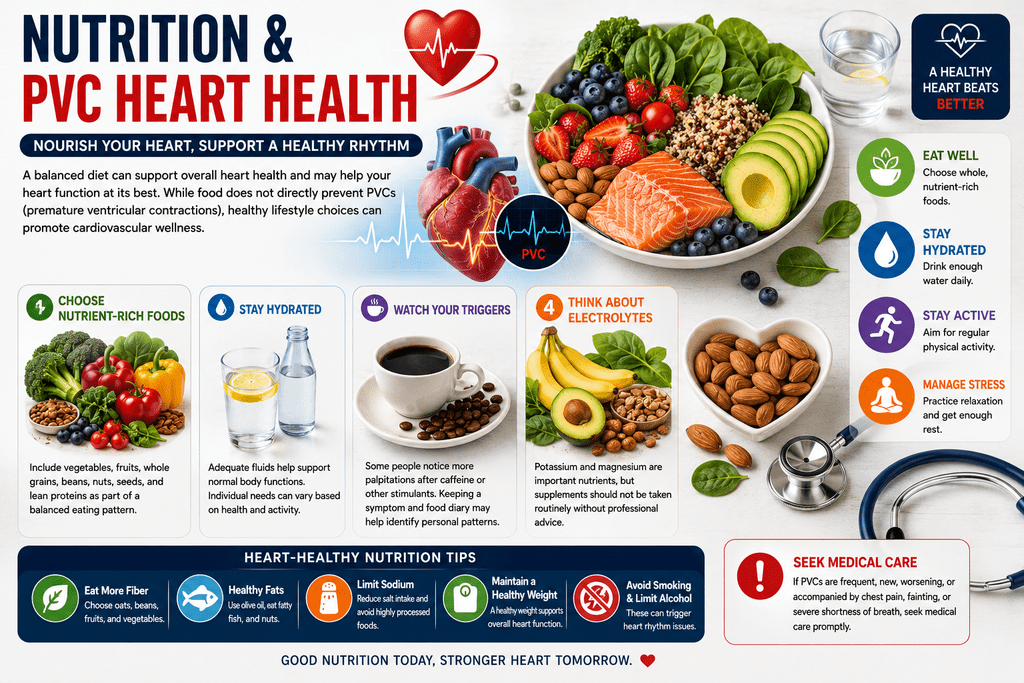
Nutrition & PVC Heart Health are connected through overall cardiovascular wellness, hydration, and balanced nutrition. Premature ventricular contractions (PVCs) are extra heartbeats that can feel like fluttering, pounding, or a skipped beat. While diet does not necessarily prevent PVCs, healthy eating can support your heart and overall well-being.
🥗 Choose Nutrient-Rich Foods
Include vegetables, fruits, whole grains, beans, nuts, seeds, and lean proteins as part of a balanced eating pattern.
💧 Stay Hydrated
Adequate fluids help support normal body functions. Individual needs can vary based on health and activity.
☕ Watch Your Triggers
Some people notice more palpitations after caffeine or other stimulants. Keeping a symptom and food diary may help identify personal patterns.
⚡ Think About Electrolytes
Potassium and magnesium are important nutrients, but supplements should not be taken routinely without professional advice.
❤️ If PVCs are frequent, new, worsening, or accompanied by chest pain, fainting, or severe shortness of breath, seek medical care promptly.