



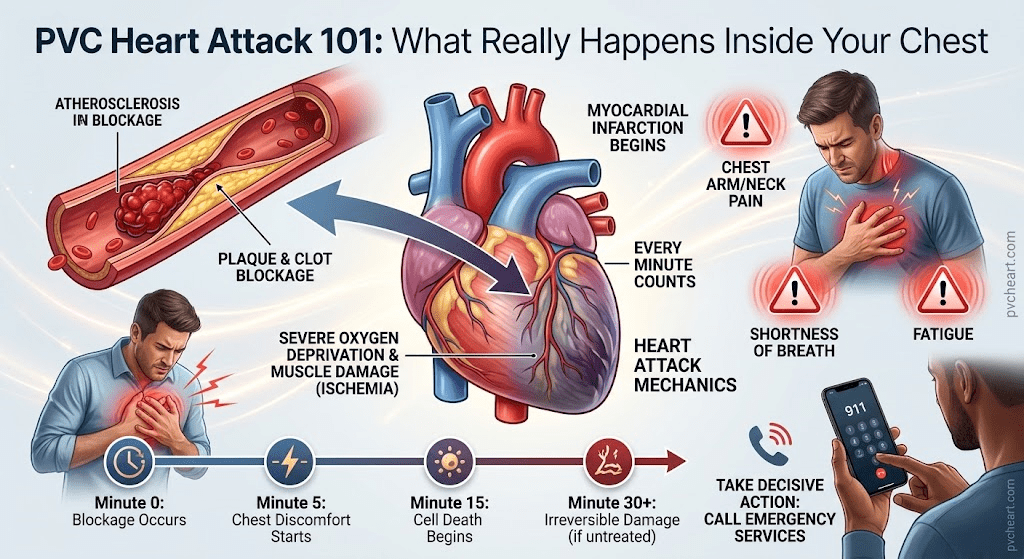
Every year, millions of people experience a sudden, life-altering medical event, yet many remain unsure of what is actually happening inside their chest when it strikes. Understanding the mechanics of a heart attack—known medically as a myocardial infarction—is one of the most vital steps you can take toward protecting your long-term cardiovascular health.
At PVC Heart, we believe that clear knowledge empowers better health decisions. When a heart attack occurs, every single minute counts; knowing how blood flow is interrupted, how your cardiac tissue reacts, and how warning signs manifest can quite literally save a life. This foundational guide breaks down the biological sequence of a heart attack, helping you spot the early warning signs, understand the damage occurring under the surface, and take decisive action when it matters most.
2.How a Heart Attack Begins: The PVC Heart Guide to Causes
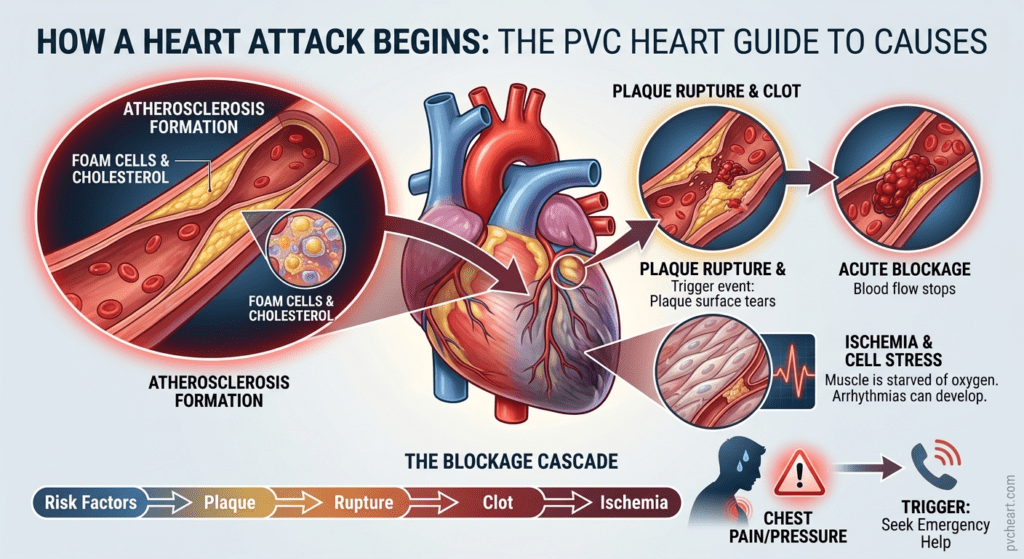
Understanding the progression of a heart attack is essential for early recognition and quick action. In How a Heart Attack Begins: The PVC Heart Guide to Causes, we explore the primary biological triggers that compromise cardiac function and disrupt normal blood flow.
The process typically begins with atherosclerosis, where cholesterol, fatty deposits, and cellular waste build up over time inside the coronary arteries. This buildup narrows the pathways supplying vital oxygen to your heart muscle. The true crisis begins when a piece of this delicate plaque ruptures.
In response to the rupture, the body forms a rapid blood clot to seal the area, which inadvertently blocks blood flow entirely. Deprived of essential oxygen, heart muscle tissue immediately enters a state of ischemia. This severe cellular stress not only causes acute chest pain and tissue damage, but it can also trigger abnormal electrical activity across your PVC Heart, making immediate emergency medical attention critical.
3.Recognizing the Warning Signs with PVC Heart
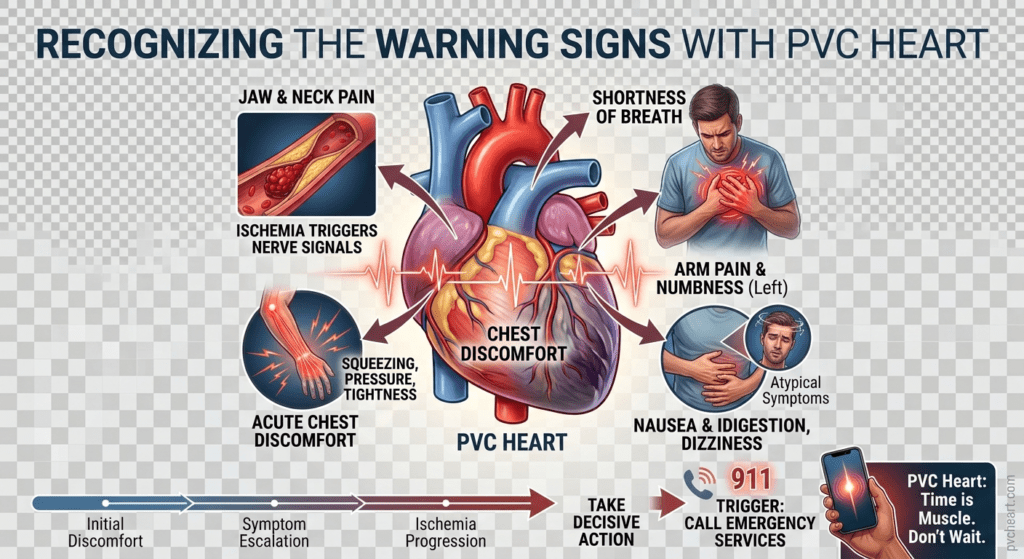
Recognizing the early warning signs of a heart attack can mean the difference between immediate recovery and long-term cardiac damage. In Recognizing the Warning Signs with PVC Heart, we outline the critical symptoms your body displays when blood flow to the heart muscle becomes severely restricted.
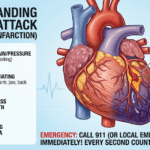
The most common signal is acute chest discomfort, often described as intense pressure, squeezing, or fullness in the center of the chest. However, warning signs frequently extend beyond the chest. Pain or numbness can radiate to the arms, neck, jaw, back, or stomach. Shortness of breath, cold sweats, unexplained fatigue, and sudden dizziness are also vital indicators.
Women, seniors, and individuals with diabetes often experience atypical symptoms, such as severe nausea or unexplained indigestion without typical chest pressure. Recognizing these subtle red flags and calling emergency services immediately protects your PVC Heart when every single second matters.
4.Step-by-Step Breakdown: What Happens During a Heart Attack
Understanding the exact sequence of events during a cardiac event can help you act quickly when seconds count. In Step-by-Step Breakdown: What Happens During a Heart Attack (PVC Heart Explains), we track the physiological timeline from initial blockage to cellular damage.
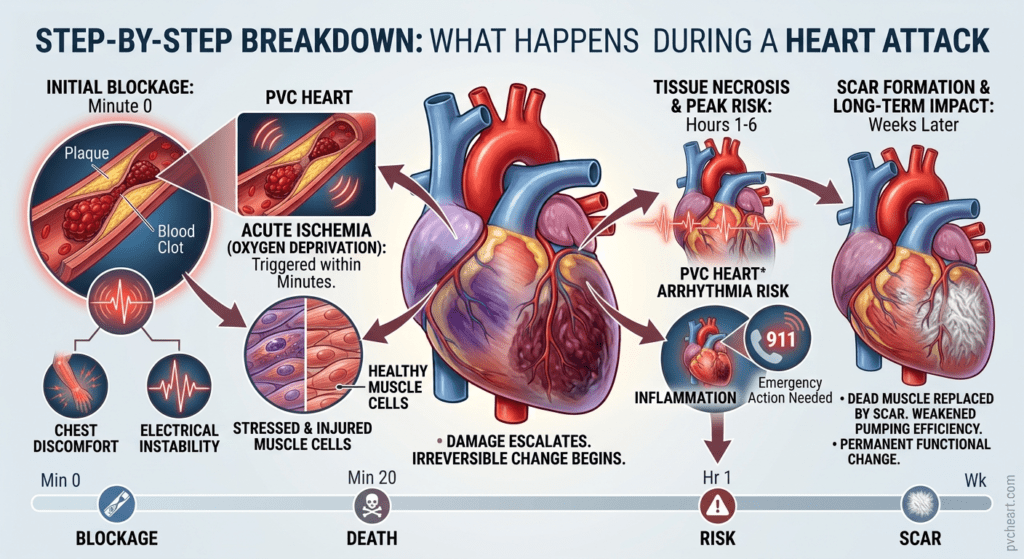
- Minute 0–20: A blood clot completely obstructs a coronary artery. Deprived of oxygen-rich blood, the myocardium enters acute ischemia, triggering chest discomfort and electrical instability across your PVC Heart.
- Minute 20–60: Without restored blood flow, cardiac muscle cells begin dying. Cellular injury escalates from reversible stress to permanent tissue necrosis.
- Hours 1–6: Inflammatory responses kick in as the body attempts to process dead tissue. The risk of life-threatening arrhythmias peaks during this window.
- Weeks Later: The damaged area replaces dead muscle with permanent scar tissue, which weakens overall pumping efficiency and long-term cardiac output.
5.How Doctors Diagnose and Treat a Heart Attack: PVC Heart Insights
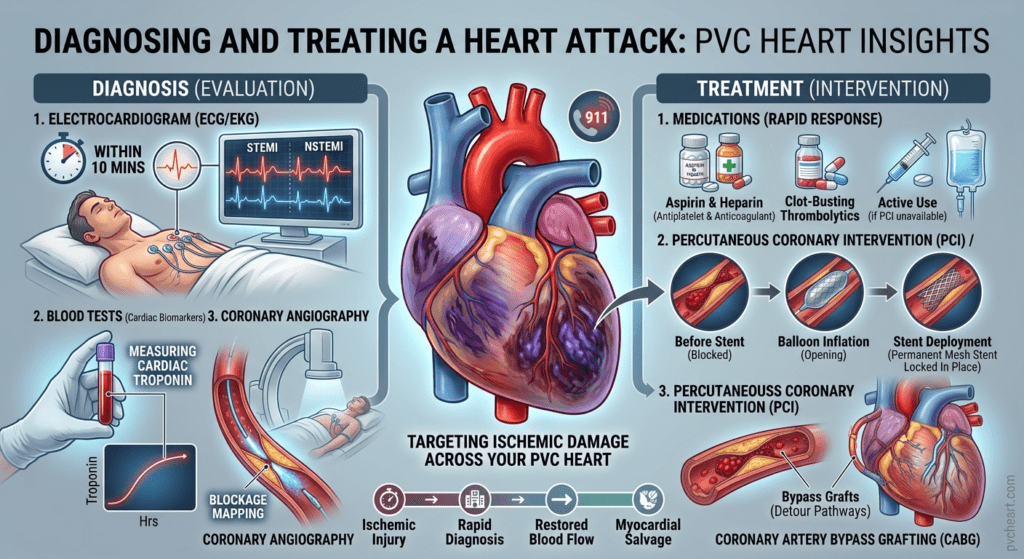
When a cardiac emergency strikes, rapid medical evaluation and immediate intervention are essential to limiting permanent muscle damage. In How Doctors Diagnose and Treat a Heart Attack: PVC Heart Insights, we outline the critical clinical steps used to evaluate and resolve a myocardial infarction.
Diagnostic Tools
- Electrocardiogram (ECG/EKG): Performed within 10 minutes of hospital arrival, an ECG monitors electrical activity to identify whether the blockage is total (STEMI) or partial (NSTEMI).
- Cardiac Biomarker Tests: Blood tests measure elevated levels of troponin, a key protein released when heart tissue experiences ischemic damage.
- Coronary Angiography: A catheter injects specialized contrast dye into coronary arteries, allowing doctors to map exact blockage locations using real-time X-rays.
Emergency Interventions
- Medications: Immediate administration of antiplatelet agents (aspirin), anticoagulants, or clot-busting thrombolytics helps dissolve obstructions and restore circulation.
- Percutaneous Coronary Intervention (PCI): Cardiologists inflate a micro-balloon inside the blocked vessel and insert a permanent mesh stent to keep the pathway open.
- Coronary Artery Bypass Grafting (CABG): In severe cases involving multiple blockages, surgeons graft healthy blood vessels to bypass obstructed pathways entirely, restoring oxygenated blood flow to your PVC Heart.
6.Protecting Your PVC Heart: Prevention and Recovery
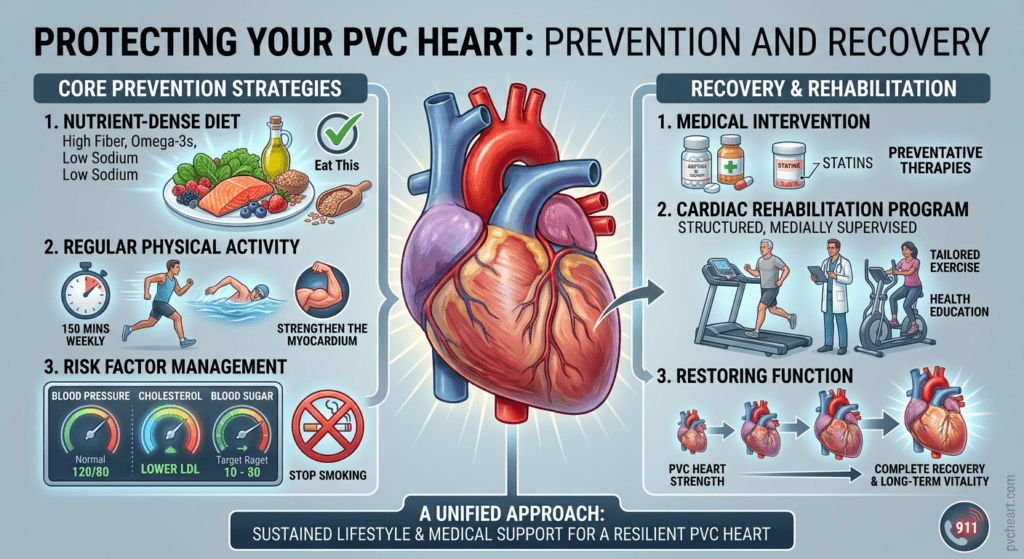
Preventing a cardiac event and rebuilding strength after a heart attack requires a dedicated, proactive approach. In Protecting Your PVC Heart: Prevention and Recovery, we focus on evidence-based strategies designed to safeguard your vascular system and support long-term cardiac health.
Core Prevention & Recovery Pillars
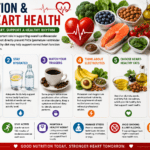
- Heart-Healthy Nutrition: Adopt a balanced diet rich in whole grains, lean proteins, omega-3 fatty acids, and leafy greens to minimize arterial plaque buildup.
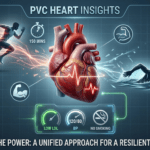
- Active Exercise Protocols: Engage in regular, physician-approved aerobic exercise—such as brisk walking or swimming—to strengthen heart muscle function and optimize circulation.
- Risk Factor Management: Continuously monitor and control key health metrics, including blood pressure, LDL cholesterol, and blood glucose levels.
- Lifestyle & Cardiac Rehab: Avoid tobacco use, practice stress-reduction techniques, and participate in structured cardiac rehabilitation programs to ensure a safe, monitored recovery for your PVC Heart.


![alt="8K hyper-realistic photograph inside a modern US electrophysiology clinic. A compassionate female cardiologist with PVC HEART branding on her lab coat points to a high-resolution monitor displaying an ECG tracing with an isolated wide QRS complex and compensatory pause. An attentive patient watches while holding a matching printed rhythm reference sheet. Soft ambient clinic lighting, medical precision, [MEDICALLY REVIEWED] trust seal visible."](https://pvcheart.com/wp-content/uploads/2026/07/watermarked_img_8726221352871066765-500x330.png)
![alt="8K hyper-realistic photograph inside a modern US medical clinic. A reassuring female cardiologist (PVC HEART branding, Dr. Sarah Jenkins) is seated at a desk, softly pointing to a wall monitor that explicitly displays the title 'BLOOD WORK FOR HEART PALPITATIONS: KEY LAB TESTS' and structured data for electrolytes, thyroid, CBC, and glucose. An attentive American patient listens, holding the matching printed checklist. Natural golden hour lighting, sharp detail, [MEDICALLY REVIEWED] seal visible."](https://pvcheart.com/wp-content/uploads/2026/07/Gemini_Generated_Image_catzaucatzaucatz-500x330.png)